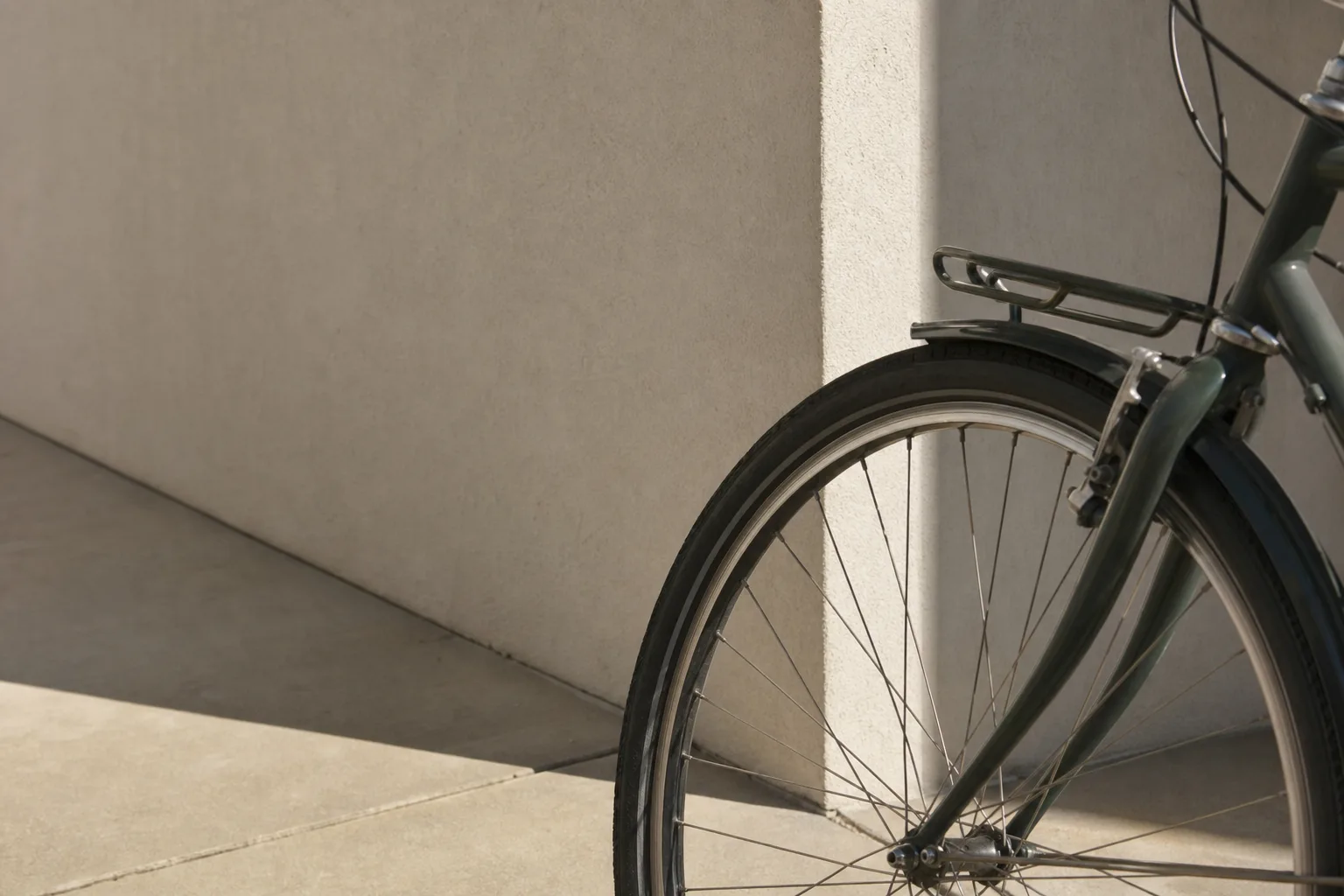
An upright cruiser ridden two or three miles at a time, on flat streets, in a city where the pavement holds heat well past sundown, wears out in a pattern that is easy to predict once you have watched it happen for a year. Nothing on the bike fails dramatically. Rubber softens and scuffs away faster than it would in a mild climate, thorns arrive in season, dust turns oil into grinding paste, and brake parts glaze quietly. The costs are small and regular. What follows is the order a careful owner checks things in, and what each item tends to run.
1. Tires, and why heat shortens the interval
Asphalt in July is far hotter than the air above it, and a soft-compound tire run at the low end of its pressure range deforms more, heats more, and abrades faster. On a cruiser doing short errands, the tread rarely wears through the center the way it does on a commuter bike; instead the sidewalls crack, the casing squares off, and small cuts stop closing. Check the sidewall for fine lines and the tread for embedded glass every month or so. A tire that shows cracking through to the fabric should be replaced before it strands you, not after.
2. Goathead season, and the case for sealant
Puncturevine, the source of the goathead thorn, dries out and drops its seed heads along the edges of alleys, canal paths, and unpaved shoulders, which is exactly where a cruiser gets ridden. The thorn is hard enough to sit in the tread for days and work inward with each rotation. Sealant poured into a standard Schrader tube, or run in a tubeless setup, closes those pinholes as they open and is the single cheapest thing you can do to keep a bike in service. It does not fix a sidewall cut, and it dries out in heat, so plan on refreshing it annually.
3. Chain lubrication when the air carries grit
A wet, sticky lubricant collects dust and turns into a grinding compound that wears the rollers, the chainring teeth, and the rear cog together. A dry or wax-based lubricant, applied to a clean chain and wiped down after it sets, holds up better here, though it needs reapplying more often. Wipe the chain with a rag before every application rather than adding fresh oil to old grime. If the chain has started to skip under pedaling load, the cog is usually worn too, and replacing both together costs less in the long run than doing it twice.
4. Rim brakes versus a coaster hub
Rim brake pads are consumable and cheap, and in dust they wear faster because grit embeds in the rubber and works on the braking surface of the rim. Pull the grit out with a pick, check that the pad still has visible grooves, and look at the rim sidewall for a concave wear line. A coaster brake asks for almost nothing between overhauls, but the grease inside the hub does break down, and when it does the brake grabs or slips. Repacking the hub is shop work, infrequent, and worth scheduling before it announces itself. The Consumer Product Safety Commission sets the federal safety requirements that bicycles sold in the United States are built to, including braking performance.
5. What a year of parts adds up to, and what to check on a listing
The recurring line items are two tubes or a sealant refill, one pair of tires every year or two depending on mileage and storage, a bottle of chain lubricant, and a set of brake pads. Ranked by cost, tires dominate and everything else is minor; the whole year lands well under what one unexpected car repair costs, and shop labor is the variable, so call for current rates. Buying used, spin both wheels and watch for wobble, squeeze the tires for hardness and check the date and cracking, lift the chain off the chainring to gauge stretch, and pedal backward to feel whether a coaster brake bites cleanly.
A bike stored in a carport bakes even when it is not ridden, so the same inspection applies to a machine with almost no miles on it. Rubber ages on the calendar, not the odometer.